
How to Increase the Lifespan of Your Solar Battery

Introduction
Solar batteries are a crucial part of solar energy systems, and their performance and lifespan directly affect system efficiency, reliability, and overall costs. Extending the lifespan of a solar battery not only reduces replacement expenses but also improves system efficiency and ensures a consistent, reliable energy supply over time. In this article, we examine scientifically how to prolong the life of solar batteries, focusing on LiFePO4 and other common types, while providing practical tips that can be applied in residential, commercial, and small industrial setups.
Why Battery Lifespan Matters
Solar batteries store the energy generated by photovoltaic panels and supply it when needed, particularly during nighttime or cloudy days. The lifespan of a battery is usually expressed in terms of the number of charge-discharge cycles it can handle or the number of years it can provide stable operation. Premature battery degradation can lead to increased replacement costs, reduced energy efficiency, and possible interruptions in energy supply. This can affect not only the economics of the system but also the sustainability of energy use, especially in off-grid areas where uninterrupted power is essential. Extending battery life is therefore a direct investment in energy efficiency, cost savings, and long-term system reliability.
Choosing a Quality and Suitable Battery
The type and quality of a battery significantly influence its longevity. LiFePO4 batteries are known for their very high lifespan, excellent safety features, and superior energy efficiency compared to older battery technologies. Traditional Li-ion batteries offer moderate lifespan and good efficiency, making them a practical choice for smaller systems but not ideal for heavy, long-term usage. Lead-acid batteries, while still common due to their low initial cost, have shorter lifespans, require more maintenance, and are less efficient. For most residential and commercial applications, LiFePO4 batteries are the best option. They can endure over 6,000 charge-discharge cycles with minimal maintenance, providing a stable, long-term energy solution.
Battery capacity and voltage must also match the energy requirements of the solar system. If a battery is undersized, it will experience more frequent charging and discharging cycles, which significantly reduces its overall lifespan. Proper sizing ensures that the battery operates within safe limits, improving both performance and durability.
Avoiding Overcharging and Over-Discharging
Overcharging is one of the main causes of reduced battery life. Excessive charging increases internal temperature, accelerates chemical aging, and may cause permanent damage to the cells. Similarly, over-discharging decreases the battery’s capacity and can cause structural damage to the cells, which further shortens its operational life. A reliable solution is the use of a Battery Management System (BMS), which automatically controls the charging and discharging currents and voltages to ensure safe operation. Most modern LiFePO4 batteries include an internal BMS that protects the battery, maintains safety, and maximizes lifespan.
Temperature and Environmental Management
Ambient temperature plays a critical role in battery performance and longevity. LiFePO4 batteries typically charge optimally between 0 and 55°C, discharge safely from -20 to 60°C, and should be stored in environments between 10 and 30°C. Extreme heat can accelerate chemical reactions that degrade battery cells, while extreme cold can reduce capacity and energy delivery. It is recommended to install batteries in ventilated areas, away from direct sunlight, to ensure they remain within safe operating temperatures. Proper environmental management is particularly important in regions with significant seasonal temperature variations.
Regular Maintenance and Periodic Checks
Routine checks are essential for prolonging battery life. Monitoring voltage and current ensures that the battery operates within safe limits. Keeping the battery and its connections clean from dust, dirt, and moisture helps prevent short circuits and efficiency loss. Proper ventilation reduces the risk of overheating, especially in tightly enclosed installations. Although LiFePO4 batteries require minimal maintenance, periodically inspecting connections and the installation environment ensures optimal performance and prevents avoidable issues.
Optimal Charging and Depth of Discharge Management
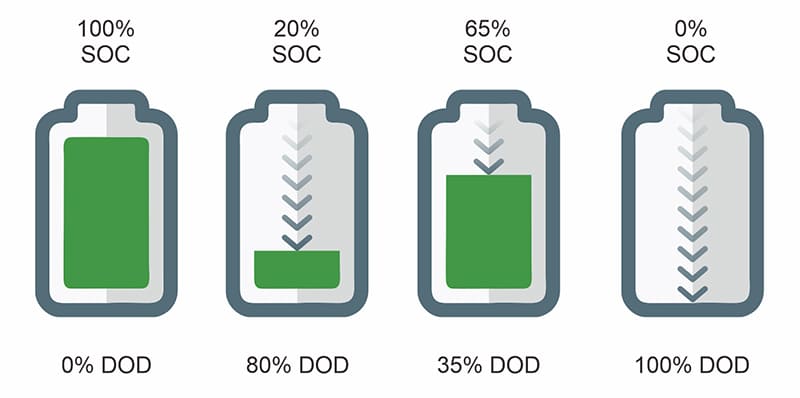
Depth of Discharge (DoD) has a direct effect on battery longevity. Using a lower DoD generally increases the lifespan of a battery. For instance, a LiFePO4 battery cycled at 80% DoD can last more than 6,000 cycles, whereas full 100% DoD significantly reduces the number of cycles. System settings should ideally allow the use of 70–80% of battery capacity per cycle, with the BMS preventing full discharge. By carefully managing DoD, users can avoid premature degradation and maintain consistent energy delivery over the battery’s lifetime.
Protecting Against Voltage and Current Fluctuations
Voltage and current fluctuations can damage cells and reduce battery life. Using a high-quality inverter, protecting the battery against overcurrent, and ensuring that the charger is compatible with the battery type are essential preventive measures. LiFePO4 batteries with internal BMS automatically manage current and voltage, but choosing appropriate auxiliary equipment remains critical to maintaining battery health.
Proper Storage During Inactivity
If a solar system is not used for an extended period, certain storage practices can help preserve battery life. Charge the battery to around 50–60% before storage, keep it in a cool and dry environment, check voltage periodically, and avoid full discharge or short circuits. Proper storage is especially important for LiFePO4 batteries during winter months or other long periods of inactivity, ensuring that they remain ready for use when needed.
Choosing a Reliable Brand and Warranty
The quality of battery construction and the reputation of the manufacturer significantly affect lifespan. Reputable brands typically use high-quality cells, offer internationally standard BMS, and provide technical support, reducing the risk of early failure. Additionally, batteries with warranties provide peace of mind and help safeguard against unexpected defects or performance issues.
Conclusion
Maximizing the lifespan of a solar battery requires attention to several key factors. Select a high-quality battery suitable for your system, preferably LiFePO4. Use internal BMS to prevent overcharging or over-discharging. Maintain proper temperature and environmental conditions, perform regular maintenance and inspections, manage the depth of discharge, protect against current and voltage fluctuations, store the battery correctly during periods of inactivity, and choose a reputable brand with reliable warranty and support. Following these guidelines will help ensure that residential or commercial solar systems operate efficiently, safely, and economically over the long term, providing consistent and reliable energy for years to come.




Submit your first comment